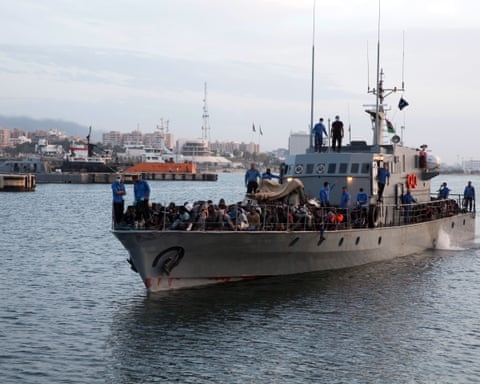
A coalition of thirteen independent search-and-rescue organizations has announced a complete cessation of all operational communications with the Libyan coastguard. The move comes as a direct response to what the groups describe as a pattern of violent interceptions at sea and the subsequent return of migrants to well-documented conditions of abuse within Libya.
The decision represents a formal break from pressure exerted by European authorities, who have increasingly urged civilian rescue vessels to coordinate with the Libyan services. The Libyan coastguard is a primary beneficiary of European Union funding, training, and equipment, as part of the bloc’s strategy to curb maritime arrivals.
In a joint declaration, the NGOs labeled the Libyan forces an “illegitimate actor at sea,” asserting that Libya cannot be considered a safe port for refugees and migrants. They cited systematic human rights violations in Libyan detention centers, including torture and forced labor, which have been extensively documented by international bodies.
“We are being compelled to interact with actors who are part of a violent system enabled by Europe,” stated a representative from one of the involved organizations. “Ending this communication is a legal and moral imperative—a line against complicity.”
The groups acknowledged that their defiance could lead to significant repercussions, including hefty fines, the detention of their crews, and the seizure of their vessels. Despite these risks, they maintain that treating armed militias as legitimate rescue authorities is unconscionable.
The tension surrounding civilian rescue operations in the Central Mediterranean has intensified in recent years. Rescue NGOs, credited with saving over 155,000 lives in the past decade, face increasing administrative and legal obstacles, particularly from Italian authorities. Simultaneously, there have been repeated allegations of aggression by Libyan forces against aid vessels, including reports of gunfire.
To consolidate their response, the thirteen organizations have formed a new alliance, the “Justice Fleet.” This coalition aims to systematically document incidents involving the Libyan coastguard and pursue legal accountability. The alliance frames its mission as a unified stand to defend human rights and international maritime law against escalating criminalization and obstruction.
“For a decade, we have provided emergency aid where it is desperately needed,” reads a statement from the new alliance. “In return, we have faced blockade, slander, and prosecution. We are now uniting, stronger than ever, to defend these fundamental principles together.”