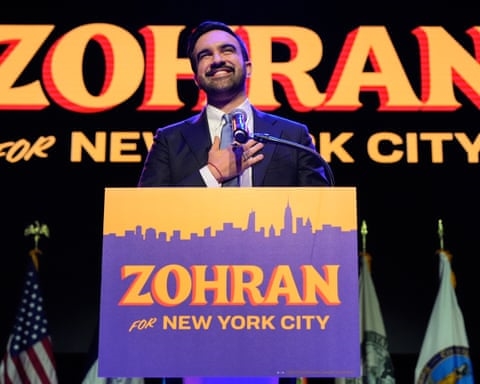
In a historic victory that has reshaped the political landscape of the nation’s largest city, the newly elected mayor delivered a powerful address centered on affordability, justice, and the power of collective hope. The speech marked not just a personal triumph but a decisive rejection of a political establishment long seen as out of touch.
The mayor-elect framed the win as a victory for the hands that build, deliver, and serve the city—hands often excluded from the halls of power. The campaign, he stated, was built by and for the everyday people of New York: from healthcare workers and taxi drivers to small business owners and parents struggling with the soaring cost of living.
The address outlined a clear and ambitious mandate for change, set to begin on the first day of the new administration. The central pillar of this agenda is a sweeping plan to confront the city’s affordability crisis, promising immediate relief for millions of renters, a transformation of public transit, and accessible childcare for all families.
The speech directly challenged the politics of division and fear, arguing that for too long, the city’s leadership has served the interests of a wealthy few. The new administration, he pledged, would prove that competent, compassionate governance is not only possible but essential. This includes a renewed commitment to public safety achieved through community partnership and addressing root causes like mental health and homelessness.
In a pointed message, the mayor-elect declared an end to an era where big money and corruption dictate policy, vowing to stand firmly with organized labor and hold powerful interests accountable. He positioned New York, a city of immigrants, as a beacon of resilience and a model for how to confront national challenges, including the threat of authoritarianism.
Acknowledging his identity as a young, Muslim democratic socialist, the mayor-elect refused to apologize for what some critics called political liabilities. Instead, he argued that these very qualities reflect the city’s diversity and prove that the old political conventions have failed its people.
The ultimate promise, he concluded, is a government that measures its success not in abstract terms, but in tangible improvements in the lives of its residents: a stable rent payment, a reliable bus ride, a safe street, and the feeling that the city finally works for everyone. The power, he affirmed, now belongs to the people of New York.