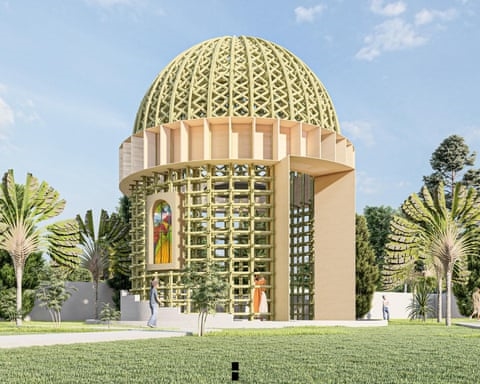
A striking new landmark now graces the skyline of Benin City, Nigeria. In the Iyekogba neighbourhood, a 15-meter-tall bamboo pavilion, its form echoing ancient bronze artistry, stands ready to welcome the public. This structure is the centerpiece of the newly opened Black Muse Sculpture Park, a sprawling green space dedicated to contemporary art, which launches alongside the city’s first Black Muse arts festival.
The park represents the realization of a long-held dream for its founder, artist Victor Ehikhamenor. Having acquired the land over a decade ago, he envisioned creating a permanent hub for artistic innovation in the city of his youth. The 3,500-square-meter park is designed as both a tribute to Benin’s centuries-old creative legacy and a platform for its future.
“The vision is to invest in the cultural infrastructure of Nigeria,” explained Ehikhamenor. “This is a place built for artists to collaborate and experiment, and for the community to engage with art in an open, accessible environment.”
The park’s architectural centerpiece, designed by architect James Inedu-George, draws inspiration from historic Benin bronze heads and traditional Nigerian bamboo construction. Its stained-glass elements reflect the region’s deep Christian heritage. The park’s low walls feature intricate reliefs carved by master artisans, creating a tangible link between skilled craftsmanship of the past and present.
This opening coincides with a significant moment for Benin City’s cultural scene, occurring just as the new Museum of West African Art (MOWAA) prepares to launch its own exhibitions on a nearby campus.
Beyond celebrating visual art, the project consciously reclaims urban green space. The park is landscaped with indigenous plants, many of which hold cultural and spiritual significance. “We can have both development and nature,” Ehikhamenor emphasized, noting the festival’s theme, Let the Forest Dance.
The accompanying festival is conceived as a grassroots, public celebration. It will feature an exhibition of contemporary West African artists, alongside live performances, literary readings, film screenings, and hands-on workshops in practices like bronze casting. A key focus is community integration, with plans for free public access, educational tours for local schools, and collaborations with the University of Benin.
“The festival is an open invitation,” Ehikhamenor stated. “We want families, students, and everyone to experience art not as something distant, but as a vibrant part of everyday life. This is about feeling and participating in the creative pulse of our time.”