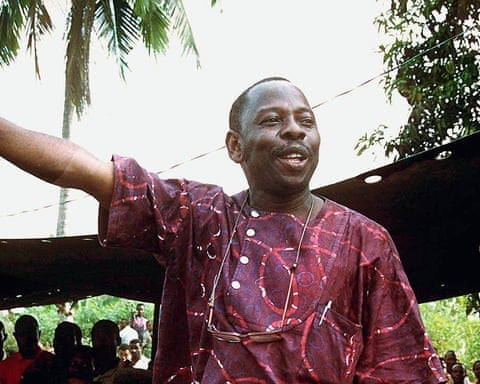
Three decades after his execution, the Nigerian government has issued a pardon for Ken Saro-Wiwa and eight fellow activists, known as the Ogoni Nine. They were hanged in 1995 by a military regime after a widely condemned trial, their true “crime” being a peaceful campaign against the environmental devastation wrought by oil extraction in their homeland. While the pardon is noted, for the families it remains a hollow gesture—an implicit admission of guilt for men who were innocent. Full exoneration, they argue, is what justice demands, a step authorities have persistently refused to take.
The struggle led by Saro-Wiwa did achieve a critical victory: forcing Shell to withdraw its operations from Ogoniland in 1993. In the years since, the company has faced legal accountability for some spills, and a state-led cleanup project was established. Yet the legacy is deeply mixed. Pollution remains rampant, compounded by pipeline sabotage and illegal refining. Economic desperation has led some in the community to call for the oil companies’ return—a prospect viewed by many as a profound betrayal of the sacrifices made.
A recent journey through the neighbouring Obrikom oil field offered a stark warning. There, for months, a ruptured pipeline spewed crude into a river, a vivid illustration of the ongoing ecological toll. This stands in sharp contrast to emerging alternatives. In the riverine community of Umuolu, a new solar power plant now provides reliable, clean energy, fostering local enterprise without the threat of spills or the disputes that often accompany oil jobs.
This points to a broader potential. The region’s true wealth may lie not underground, but in its natural ecology. Conservation efforts, like one protecting a primary rainforest in the Niger Delta, show how environmental stewardship can preserve critical habitats and species. Yet a cultural shift is urgently needed. The recent appearance of a rare leatherback turtle on an Ogoni beach, met with discussions about whether to eat it, highlights how much education is required to see wildlife as an asset to be protected, not consumed.
The vision championed by Saro-Wiwa was of a future built on education and ecological health, not fossil fuels. Through foundations bearing his name, work continues to bring solar power and learning to Ogoniland, aiming to transform it into a hub of sustainable agriculture and green entrepreneurship. Thirty years after his death, the fight is no longer just about ending pollution, but about building the alternative he foresaw—a future powered by the sun, sustained by the land, and finally free from the curse of oil.