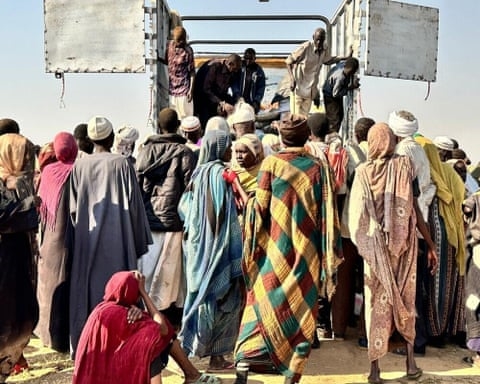
The city of El Fasher in Sudan’s Darfur region has fallen, and the aftermath is a scene of unspeakable horror. After a prolonged siege, the paramilitary Rapid Support Forces (RSF) have taken control, unleashing a wave of violence so severe that its brutality is visible from space. Reports from the ground describe mass executions, with hundreds of civilians, including patients in a maternity hospital, summarily killed. The events of recent days are being grimly compared to the opening hours of past genocides.
This capture marks a decisive and bloody turning point in Sudan’s protracted civil war, now entering its third year. The conflict, which erupted in April 2023, pits the national army against the RSF—a powerful militia that evolved from the notorious Janjaweed fighters. What began as a power struggle between former allies has devastated the nation, displacing millions and leaving tens of thousands dead.
In Darfur, the RSF’s campaign has taken a distinctly ethnic character, targeting non-Arab communities with systematic violence. El Fasher, the last army stronghold in the region, had become a refuge for over a million displaced people. Its fall traps a terrified population with nowhere to flee, facing a force whose commanders have openly declared their intent to show no mercy.
This catastrophe was both predicted and preventable. For months, warnings were issued of an impending massacre. The international community, however, has stood by. A primary reason for the RSF’s lethal capability is the substantial financial and military backing it receives from the United Arab Emirates, a key regional power. Despite overwhelming evidence of this support, which perpetuates the conflict and its atrocities, no meaningful pressure has been applied to halt it.
The war in Sudan is often called forgotten, but a more accurate term is ignored. The global response reveals a foreign policy landscape where strategic and economic interests consistently override human rights. Powerful nations, allied with the conflict’s sponsors, have chosen diplomacy over decisive action, effectively tolerating the violence.
The result is a stark reality: a militarily sponsored militia is conducting what evidence suggests are crimes against humanity, while those with the leverage to stop it look away. The blood staining the earth of El Fasher is a testament not only to the perpetrators on the ground but to a world that has calculated that some horrors are not worth preventing. The people of Darfur are running out of time, and every moment of inaction adds to the death toll.